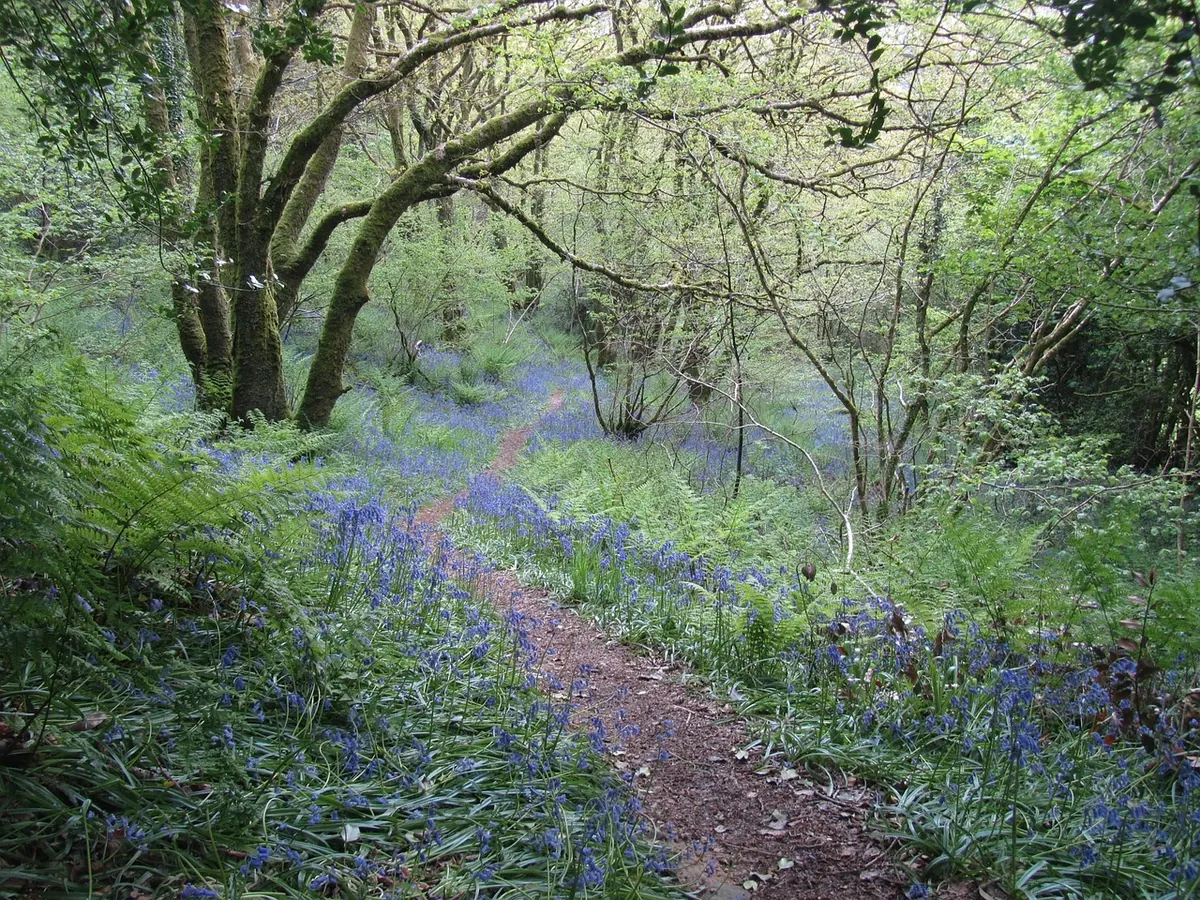
Few things in a British wood announce themselves as clearly as a badger sett. Freshly dug soil spills down a bank, a worn path vanishes into a dark mouth beneath a tree root, and somewhere close by there will be a latrine: a shallow scrape, a few dark droppings, a smell you will recognise next time. Badgers have been excavating here for a very long time. The law protecting those excavations is much younger, and it catches out plenty of people who meant no harm at all.
If you manage woodland, plan a felling, or own a site where a housing scheme might go, the question is always the same: is there a sett here, and is it in use? Answer it early and honestly, and most difficulties never arise.
In law, a badger sett is not simply a hole. It is any structure or place that displays signs indicating current use by a badger. That definition is broad enough to cover a single tunnel under a root plate, a network of entrances in a railway embankment, and the classic main sett that has been occupied for decades. The key phrase is current use. A collapsed, overgrown hole with no fresh spoil, no footprints and no latrine may not meet the legal test, but it can still be an important part of a wider sett complex, and it can still raise planning and welfare issues.
Badger setts are usually described in four rough categories:
This matters because a single "small hole" may be an outlier today and an active breeding sett next spring. Badgers are creatures of habit, but they also move in response to disturbance, weather, food supply and woodland operations. A sett that looks quiet in January can be busy by April. That is why a one-off glance is rarely enough.
You do not need to be a licensed ecologist to spot the basics, though you should not disturb a sett to confirm your suspicions. Look from a distance and note what you see.
If you think you have found a sett, stop digging, stop clearing and stop planning the route through it. Take a grid reference, photographs from a safe distance, and ask a qualified ecologist to advise.
In England and Wales, the main legislation is the Protection of Badgers Act 1992. In Scotland, badgers are protected under the Protection of Badgers Act 1992 as amended, along with the Nature Conservation (Scotland) Act 2004. In Northern Ireland, the Wildlife (Northern Ireland) Order 1985 provides protection. The detail differs, but the principle is consistent: badgers and their setts are protected from deliberate harm and from many forms of disturbance.
It is an offence to kill, injure or take a badger, to cruelly ill-treat a badger, to dig for a badger, or to damage, destroy or obstruct access to a badger sett. It is also an offence to disturb a badger while it is occupying a sett, or to cause a dog to enter a sett. That last point catches out dog walkers and estate workers who let a terrier investigate a hole "just to see."
The protection is not absolute in every practical sense. Licences can be granted for certain purposes, including development, forestry, agriculture, archaeology and research. But a licence is not a formality. It is a legal permission with conditions, and it is usually granted only after a survey, an impact assessment and a mitigation plan. The licensing authority will want to know why the work cannot avoid the sett, how the badgers will be protected, and what will happen to the sett and its entrances.
Badger setts can be subtle. A main sett in a quiet wood may look like a few holes in a bank. An outlier may be no more than a tunnel under a log pile. But the law does not require you to have intended harm. It requires you to have carried out the prohibited act. In practice, that means anyone working in woodland, farming, forestry or development needs to know the signs and to check before operations begin.
This is especially true for fencing, track construction, drainage, tree felling, stump grinding, and any work that involves heavy machinery near a bank or root plate. A single pass with a mechanical digger can destroy a sett that has been there for generations. Even if the badgers escape, the sett may be damaged beyond use, and the offence may already be committed.
For planning applications, badgers are a material consideration. Local planning authorities expect ecological information to be proportionate to the likely impacts. If a site has woodland, hedgerows, banks, railway embankments or old quarries, there is a reasonable chance of a sett. If there is a sett, the applicant will usually need a survey by a suitably experienced ecologist, and often a licence from the relevant statutory body before work can lawfully affect it.
The best outcome is avoidance. If a layout can be adjusted to leave the sett and a buffer of undisturbed habitat, the planning process becomes much simpler. Buffers are not a fixed number in law, but a common starting point is at least 30 metres from a sett for light works, with larger distances for main setts, blasting, piling or significant vibration. Some authorities ask for more. The right figure depends on the sett type, the works, the topography and the ecologist's advice.
If avoidance is not possible, mitigation might include:
Planning permission does not override badger legislation. You can have a valid consent and still commit an offence if you damage a sett without a licence. That is why the ecological work should be front-loaded, not bolted on after the diggers arrive.
Woodland managers often ask whether normal silviculture is affected. The answer is yes, if a sett is present. Thinning, felling, extraction routes, access tracks and fence lines all need checking. A well-used badger path may cross a proposed extraction route; a main sett may sit exactly where a new ride is planned. Early walkover surveys, ideally in winter when vegetation is low but before works begin, can save money and legal risk.
It is also worth remembering that badgers are part of the woodland ecosystem. Their digging aerates soil, creates microhabitats and moves nutrients. A sett is not just a hole; it is a long-term feature that other species use. Foxes, rabbits and invertebrates may take advantage of old tunnels. The presence of a sett can be a sign of a healthy, varied wood.
Stop work near the sett immediately. Do not attempt to "make good" the damage or move the badgers yourself. Take photographs, note the grid reference and contact a licensed ecologist or the relevant statutory nature conservation body. If the work is subject to a licence, check its conditions. If it is not, you may need to redesign the operation, apply for a licence, or wait for advice. The sooner you act, the more options you have.
Badger setts in British woodlands are not obstacles to be removed. They are protected features, and often the most visible sign that a wood is alive. Learn the signs, check before you work, and take advice early. That way, the sett stays where it belongs, and so does your project.
Photo: glarcombe / Pixabay